


Scroll Down


In short
A leaking washing machine, dishwasher, refrigerator line, under-sink pipe, or air conditioner, including a mini-split condensate leak, can soak floors, walls, cabinets, and nearby rooms. A restoration technician finds where the water is coming from, removes standing water, contains the area, and removes materials that cannot be saved. We then clean, treat, and thoroughly dry the home.
An appliance leak can look small at first, then spread under cabinets, under flooring, and into the room next door. A restoration technician uses moisture meters and thermal imaging to find hidden moisture under cabinets, along baseboards, under flooring, and in the wall below a leaking air conditioner.
The water may come from a washing machine hose, a dishwasher, a refrigerator supply line, a pipe under the sink, or an air conditioner, including a mini-split that is overflowing from a clogged condensate line. Whac A Mold locates the source, removes the water, and thoroughly dries the structure.
How We Handle the Work
A restoration technician inspects the area and determines the extent of the damage.
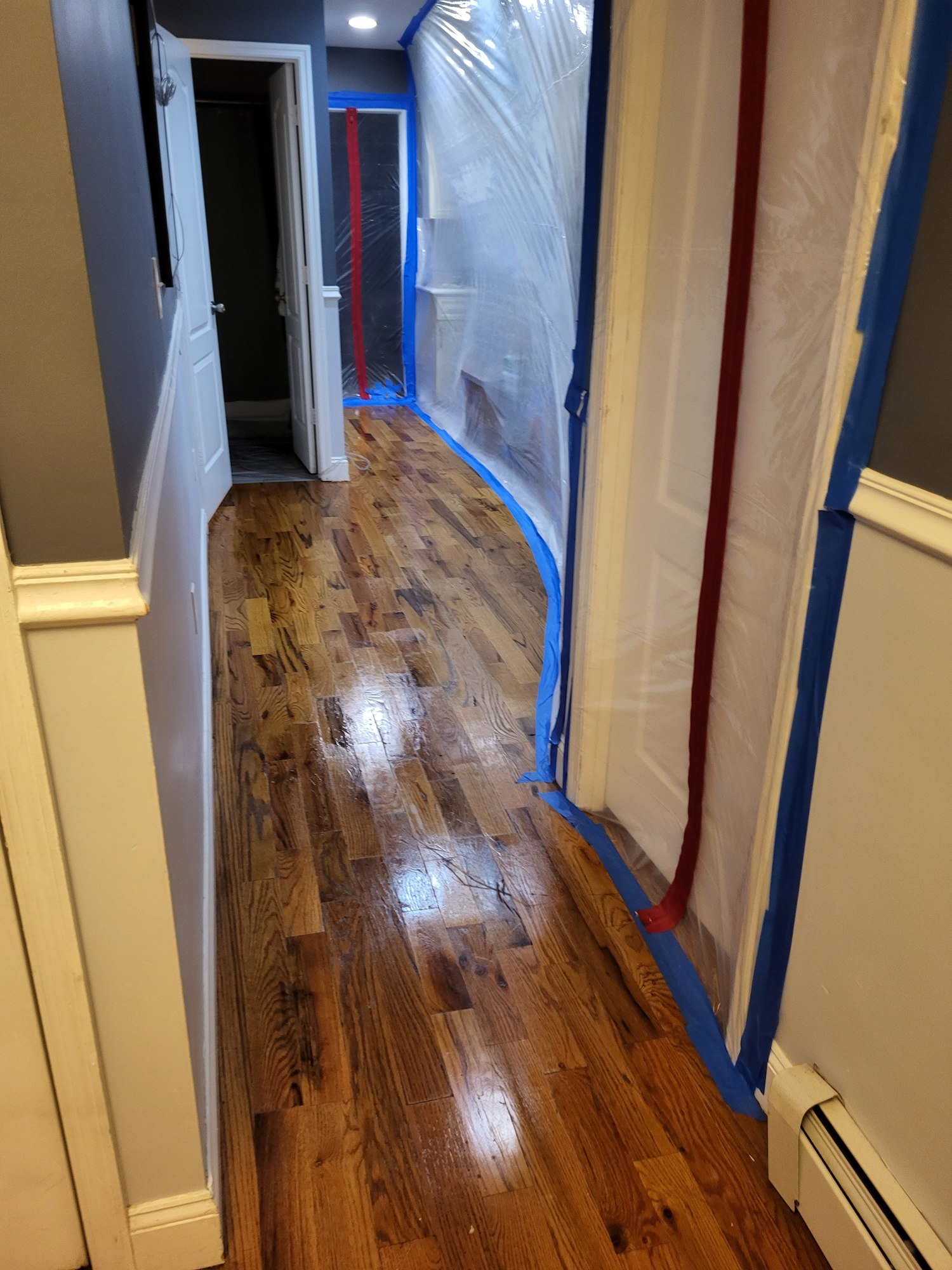
Our team locates the source, identifies all affected areas, and documents the damage for your insurance claim. We extract standing water, contain the affected area, remove materials that cannot be saved, clean and treat the remaining surfaces, and use professional air movers and dehumidifiers to dry the structure thoroughly.
We monitor moisture levels throughout the process until the affected areas are clean, dry, and ready for the next stage of restoration.
What You Can Do Before We Arrive
If it is safe to do so:
- Shut off the water supply to the appliance, or turn the air conditioner off at the unit or breaker.
- Stay away from wet electrical outlets, appliances, and standing water.
- If a hose or line broke, keep the pieces for insurance documentation.
- Move dry belongings away from the affected area.
- Contact a plumber if a hose, line, or fixture needs repair, or an HVAC technician if the air conditioner is leaking.
Your safety comes first. Do not enter areas with electrical hazards or unsafe conditions.
How We Help With Insurance
Water damage from a sudden appliance leak, including a leaking air conditioner or mini-split, is usually covered, but coverage depends on the cause of the leak and your policy.
We always double-check the policy and help you understand the available coverage.
We document the damage with photographs, moisture readings, and detailed records, and communicate directly with the insurance company throughout the claim.
We review your policy with a public adjuster to make sure mitigation and repairs are covered.
A public adjuster advocates for you with the insurance company to help maximize your coverage for the rebuild.
The contractor you hire does the rebuild.
You can learn more on our insurance claims page.
Call (917) 885-9358
Related Water-Damage Services
We also handle burst pipes, ceiling leaks, flooded basements, roof leaks, water-heater leaks, sewage backups, and other water-damage work, including mold after a leak.
Areas We Serve
We provide appliance-leak restoration throughout Brooklyn, including Marine Park, Midwood, Flatbush, Sheepshead Bay, Mill Basin, Canarsie, Borough Park, and Bensonhurst.
We also serve Gravesend, Crown Heights, Park Slope, Queens, Manhattan, the Bronx, Staten Island, Nassau County, the Five Towns, Suffolk County, Westchester County, Bergen County, NJ and Hudson County, NJ.
Frequently Asked Questions
Should I call a plumber or Whac A Mold?
Call both. A plumber repairs the hose, line, fixture, or drain. Whac A Mold removes the water, dries the structure, and addresses the resulting damage. Mitigation can often begin while the plumbing repair is being arranged.
Is an appliance leak covered by insurance?
Sudden water damage from a washing machine, dishwasher, refrigerator line, under-sink leak, or air conditioner, including a mini-split condensate leak, is usually covered. Coverage depends on the cause of the leak and your policy, so we always double-check the policy. We review your policy with a public adjuster to make sure mitigation and repairs are covered. A public adjuster advocates for you with the insurance company to help maximize your coverage for the rebuild.
Do you handle leaking air conditioners and mini-splits?
Yes. A clogged condensate line or a leaking indoor unit can soak the wall, the ceiling below, and the floor. A restoration technician finds the wet materials, removes what cannot be saved, and thoroughly dries the area. An HVAC technician repairs the unit itself.
What if the leak ran under the cabinets or flooring?
A restoration technician uses moisture meters and thermal imaging to find hidden moisture under cabinets, along baseboards, and under flooring, then dries or removes only what cannot be saved.
Do the floors and cabinets need to be replaced?
Not always. We remove only materials that cannot be safely restored. Whenever possible, we clean, treat, and thoroughly dry the remaining structure.
Can an appliance leak cause mold?
Yes. Moisture left untreated can create conditions for mold growth. Fast water extraction and professional drying help reduce that risk.
How long does drying take?
Drying time depends on the amount of water, the materials affected, and how long the area remained wet. We monitor moisture levels throughout the process and continue drying until the proper levels are reached.
What should I do before you arrive?
If it is safe, shut off the water supply to the appliance, or turn the air conditioner off at the unit or breaker. Move dry belongings away, and stay away from wet electrical outlets and standing water.